The Anthropic MHS standard enables AI agents to directly control physical devices
Anthropic has launched a new MHS hardware standard, breaking down the barrier between AI and physical devices, allowing AI agents to autonomously control hardware devices.
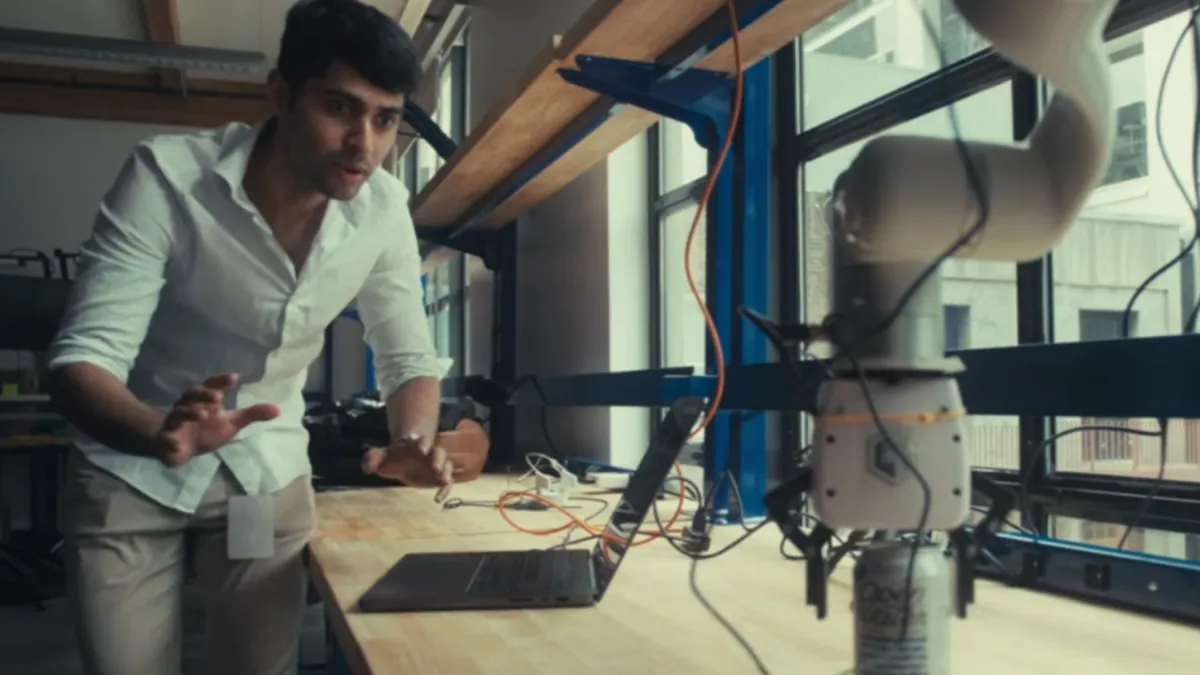
AI breaks through virtual limitations, MHS reconfigures human-machine interaction mode.
For a long time in the past, the working scope of various AI agents was always confined to pure virtual network environments. AI could only run within software systems of computers and servers and could not touch or control real physical devices. Anthropic's latest Model Hardware Standard (MHS) has changed this situation.
This brand-new technical standard is equivalent to building a universal bridge for AI and various hardware devices. It provides unified driver interfaces and data formats, allowing different models and brands of physical devices to seamlessly connect with AI agents. MHS achieves the standardization of device interconnection, enabling multiple devices to form networks independently and operate collaboratively. The previously lengthy device adaptation work can now be completed in just a few hours or even minutes, significantly improving the efficiency of hardware linkage.
Inspiration comes from scientific research practice, and AI breaks free from code constraints.
The development inspiration of MHS originated from a real brain neuroscience experiment. The Anthropic team observed that during experiments, researchers needed to coordinate multiple instruments such as laser equipment, high-precision microscopes and high-definition cameras. At that time, the researchers set up a unified interactive interface to enable all experimental equipment to work together. This idea provided inspiration to the development team, which led to the emergence of the universal MHS hardware standard.
Based on Anthropic's model context protocol, MHS can be deeply integrated with AI models such as Claude, unlocking more intelligent hardware control capabilities. Users do not need to write complex codes, they can simply issue instructions in daily natural language to have the AI control physical devices to complete tasks. The entire operation process is highly intelligent, with the AI being able to autonomously reason the operation process and independently detect running faults. The AI can also flexibly adapt to the operating requirements of different devices and scenarios according to the actual situation on site, breaking away from the fixed and rigid execution mode of traditional programs, and improving adaptability. The biggest risk of AI controlling physical devices is the disconnection between virtual training and actual hardware.
Most of the AI models are trained in virtual environment and have no knowledge of physical constraints of the real devices. This may lead to out of range operations, causing equipment failures and safety accidents. To address this issue, MHS has designed a dedicated hardware tagging system. This system accurately records all the physical parameters of the devices and simultaneously labels key information such as adjustable parameters, measurement modes, and mandatory safety restrictions.
Many industry giants have invested to jointly build a standardized ecosystem.
MHS has entered the testing phase. Anthropic has collaborated with software and hardware manufacturers such as AWS and Hugging Face, covering multiple fields including research, manufacturing, and cloud computing. The core task of all parties is to jointly establish a complete security assessment system, formulate industry standards for AI controlling physical devices, clarify the best practices for intelligent hardware interaction, and lay a solid foundation for the subsequent large-scale popularization of AI.
Before the emergence of MHS, the threshold for AI empowerment of the real industry was extremely high, and the iteration speed was extremely slow, severely limiting the development efficiency of research and industry. The appearance of MHS has bridged the technical gap in equipment adaptation. According to the official plan, in the future, MHS will achieve open-source and openness, and create a universal standard that is not bound to a specific AI agent and is not limited to a single device. Any AI model and any physical device can be adapted to this interaction system, truly breaking through the barriers between AI and the physical world.