Brent crude oil has approached the $100 mark, and the risk premium for crude oil futures has risen
The situation in the Middle East has become increasingly tense again. Brent crude oil once approached 100 dollars per barrel, and WTI strengthened. The futures price of crude oil continues to reflect the risk of supply disruption.
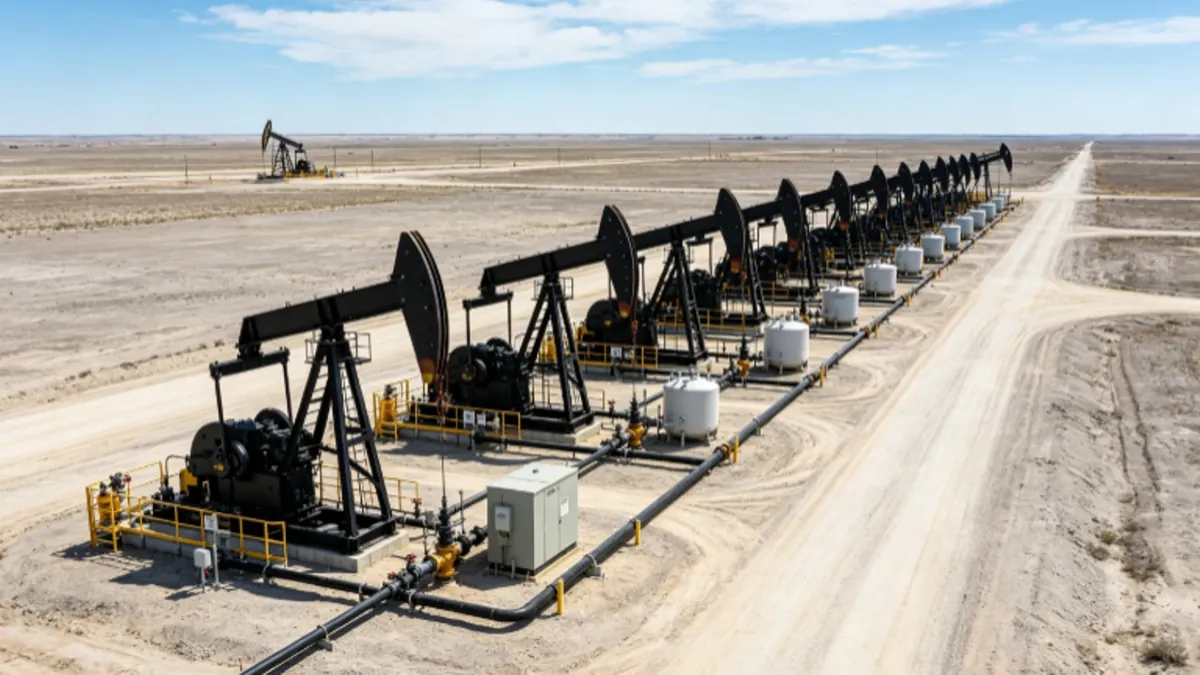
The crude oil market has rapidly pushed up the risk premium.
On the morning of September 9th, the Brent price was quoted at $99.22, with a single-day increase of 1.3%. WTI crude oil rose, with the price at $94.13, an increase of 1.2%. Since the beginning of August, the Brent price has risen by 25% in this round. The core driver of the strengthening market is the renewed deterioration of the geopolitical situation in the Middle East. The market originally had a peaceful expectation for this conflict that had lasted for six months. With the consecutive occurrence of attacks recently, this expectation for easing quickly cooled down.
The Houthi forces launched air strikes in Yemen, targeting multiple cities in Saudi Arabia. The U.S. military attacked multiple Iranian oil tankers, and Iran launched a counterattack, attacking the U.S. military base in Jordan and launching attacks on ships in the waterway. Although Saudi Arabia has adjusted its export routes and some crude oil has bypassed the Strait of Hormuz for transportation, this alternative solution has limited carrying capacity. Once Saudi's domestic energy facilities are continuously attacked, it will be difficult to maintain the current scale of crude oil exports. Traders increased their positions of the geopolitical risk premium in the crude oil futures market, and the long-term funds continued to enter.
Shipping routes and energy facilities under pressure.
OCBC analysts pointed out in their report that the attack on Saudi energy facilities by Iran, coupled with the U.S. military's strike on Iranian oil tankers, has made the market start to worry about a prolonged disruption in crude oil supply. The crude oil infrastructure and maritime shipping routes in the Middle East were already under high pressure. After the escalation of the new round of conflicts, their vulnerability has become even more prominent. The futures market distinguishes between two types of supply shocks. One is short-term attacks on ships and temporary restrictions on shipping routes, which will only push up the near-month contracts. The other is continuous attacks on oil fields, ports and refining facilities, causing a permanent decline in crude oil export capacity. This situation will lead to a simultaneous surge in long-term crude oil contracts.
Although Saudi Arabia can export a small amount of crude oil around the Strait of Hormuz, the throughput capacity of alternative pipelines and ports has an upper limit and can not fully cover the losses caused by the closure of the strait. Once the conflict expands, the insurance premiums for oil tankers will rise rapidly, and many shipowners will refuse to enter high-risk areas. Even if the oil fields are still producing, it will be difficult to transport crude oil through the strait. This is also the reason for the change in the Brent and WTI price spreads. Brent is closer to the spot trade in the Middle East and is more sensitive to geopolitical news in the Red Sea and the Strait of Hormuz. WTI is the benchmark for domestic U.S. crude oil and is less directly impacted by the Middle East, so this round of increase is weaker than Brent.
The $100 oil price triggers inflation expectations.
The rise in oil prices is not just a trend for energy commodities themselves, it also spreads to global inflation. Many Asian economies are highly dependent on crude oil imports, and the pressure of imported inflation has risen again. The Brent $100 price is not just a psychological level, it is also a warning line for the global economy. If the oil price remains above $100 for a long time, it will push up manufacturing and power costs in various countries. As production costs rise, consumer prices also increase. This will limit the room for central banks to cut interest rates, thereby suppressing economic recovery.
Inflation expectations will indirectly affect the pricing logic of oil futures. On one hand, as inflation heats up, the value preservation attribute of physical commodities improves, benefiting the bulls in the oil market. On the other hand, if oil prices rise, it suppresses economic activities, and the market will predict a shrinking demand for crude oil in the future. This will become an important basis for the bears. Many Asian countries have seen an increase in import costs, which will deplete foreign exchange reserves and put pressure on their currencies.
Crude oil futures distinguish between short-term sentiment and medium-to-long-term fundamentals.
The core variables in current crude oil futures trading are classified into several categories. The first is the events related to conflicts in the Middle East, including the targets of the attacks, whether they will expand to Saudi energy facilities, and the passage of oil tankers through the Strait of Hormuz. The second is the statements and production capacity release plans of OPEC+, whether the oil-producing countries are willing to utilize their idle crude oil production capacity. The third is the production of shale oil in the U.S. and the data on crude oil inventories, with the weekly EIA inventory report bringing short-term fluctuations in the market. The fourth is the inflation data of major economies around the world.
Currently, there is a clear divergence in the crude oil futures market. The core logic of the bulls is concentrated on the geopolitical front. The targets of the attacks in the Middle East have expanded to oil tankers and energy facilities. Once the shipping through the Strait of Hormuz is blocked, the global supply gap of crude oil will rapidly expand, and there is still room for the oil price to rise. The bears believe that currently, there is no large-scale shutdown of oilfield production, but it is just that the market has traded in advance for risks.