Shipping data boosts the geopolitical risk premium of crude oil futures
The volume of ships passing through the Strait of Hormuz has declined, coupled with the escalation of conflicts in the Middle East, causing market concerns over the disruption of crude oil exports.
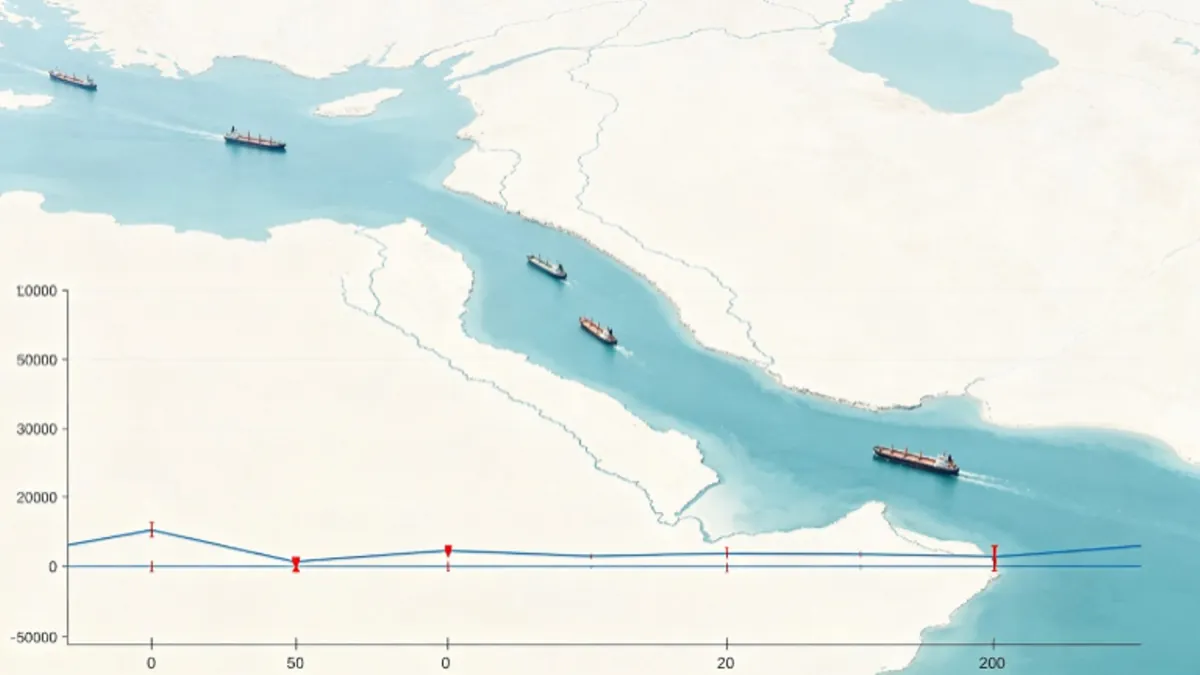
There is less navigation data for the Strait of Hormuz.
The preliminary shipping statistics published on September 9th showed that on the 8th only 6 cargo ships had passed through the Strait of Hormuz. By comparison, the average passage through the area for the past 10 days was about 12, and the recent regular level was 9. The current passage scale has shown a significant contraction. Among the 6 ships, 5 entered the strait and 1 left. The ship types included Panamax cargo ships and medium-sized oil tankers. Some vessels chose to turn off the AIS (Automatic Identification System) for ships, and these vessels would not be included in the statistics. The actual navigation scale would be higher than the recorded figures.
Before the conflict broke out, on February 28th, the Strait of Hormuz could accommodate approximately 125 large commercial ships every day, covering crude oil tankers and LNG carriers. This waterway undertakes 20% of the global transportation of crude oil and LNG, and is the core chokepoint of energy trade. Futures traders will continuously monitor such high-frequency shipping data. If shipowners are worried about being attacked, they will avoid the strait or turn off the AIS and increase insurance premiums.
The U.S. resumed the blockade measures against Iranian-related shipping in mid-July and has directly cut off Iran's exports of crude oil. Coupled with the escalation of this conflict, the uncertainty in shipping in the Strait area has further increased. The market began to assess that if the waterway remains restricted, there will be a gap in the circulation of global crude oil spot markets, and the near-month crude oil contracts will be the first to respond.
Multiple maritime attacks have led to a continuous increase in the risk of energy shipping in the Middle East.
This round of the situation in the Middle East has deteriorated further, with escalating conflicts between the U.S., Israel and Iran. The Houthi forces launched air strikes in Yemen, targeting several cities in Saudi Arabia. The U.S. military also attacked five Iranian-related oil tankers, and Iran retaliated by attacking a U.S. military base in Jordan. Marisks disclosed the list of attacked vessels, with four of them being attacked in the Arabian Gulf, outside the Strait of Hormuz, and the remaining one being attacked near the core export port of Iran, Halgir Island.
In the past, the market only worried about the bombing of oil fields and ports. Now, the attack targets directly aim at the oil tankers in transit. In this situation, the risk-averse sentiment among shipowners will rapidly rise, insurance premiums will increase, and many ships will actively avoid high-risk sea areas. Brent crude futures are more sensitive to news about the Middle East shipping routes. The benchmark spot trade of Brent relies heavily on transporting crude oil through the Persian Gulf and the Strait of Hormuz. WTI is the domestic crude oil benchmark in the U.S. and is less affected by the disturbances in the strait.
The Bab el-Mandeb strait is under simultaneous pressure, and both shipping routes have tightened.
Apart from the Strait of Hormuz, the navigation conditions of the Bab el-Mandeb Strait in the Red Sea have also cooled down. The Houthi rebels have publicly claimed to have blocked shipping routes related to Saudi Arabia. On Tuesday, 25 cargo ships passed through the Bab el-Mandeb Strait, 11 entering and 14 leaving. Compared to the past, the number of passing ships has slightly decreased. The Bab el-Mandeb Strait connects the Red Sea and the Gulf of Aden, and is an important channel for transporting oil from the Persian Gulf to the European and North American markets. If the Bab el-Mandeb Strait is blocked, oil tankers will need to take a detour through the Cape of Good Hope in Africa, resulting in a large increase in transportation mileage and time.
The risk attributes of the two shipping routes differ. The Bab el-Mandeb Strait's blockage has a greater impact on oil shipments to the Western and Eastern European regions. If the Strait of Hormuz is blocked, it directly affects the import of crude oil to the Asian market. If there are simultaneous restrictions on both the Strait of Hormuz and the Bab el-Mandeb Strait, the global oil shipping capacity will tighten at the same time. The turnaround cycle of oil tankers will be prolonged, which is equivalent to a decrease in the number of available oil tankers in the short term, and the spot premium will strengthen, driving the near-month contracts of crude oil futures to strengthen.
The current characteristics of the crude oil market are that when news is stimulating, it rises rapidly, and when the news is dull, the bulls exit their positions for profit, and the price undergoes a correction. The market is difficult to achieve a continuous upward trend without a single direction. Volatility will remain at a high level. Traders will distinguish the severity of the events. If the attacks continue to target oil tankers and military targets, they have a limited impact on the actual supply of crude oil. Once the strikes expand to oil fields and port facilities, the crude oil futures will experience a new round of jump.