Global AI-related stocks have witnessed a general decline
Top executives in the AI industry have jointly warned about the risks of technology, triggering a global sell-off in AI stocks. Chips and technology stocks across all major markets weakened.

Industry outcry becomes trigger, global AI sector undergoes collective sell-off.
Recently, the global AI stock market has declined. Senior executives of leading AI companies have spoken out, proposing to slow down the pace of cutting-edge technology research and development. This internal initiative to cool down the industry directly shattered the previous optimistic expectations of the market, triggering concentrated selling of AI-related stocks. The AI industry had been expanding at a high speed, and related investments and computing power expenditures had always been the core driving force for the rise of global technology stock markets.
The CEO of Anthropic was the first to post a long article on social platforms, stating that the iteration speed of AI models is too fast, and the safety control cannot keep up with technological development. Subsequently, the founders of OpenAI and xAI also expressed their agreement with this view. The leading companies' pessimism about the industry growth rate has greatly shaken market confidence. Coupled with global bond yields remaining at multi-year highs, the AI industry, which relied on borrowed funds for expansion, faced greater development pressure. The stock sell-off wave spread accordingly.
The chip sector in the U.S. stock market has become a big area of downdraft, with European and Asian markets also down.
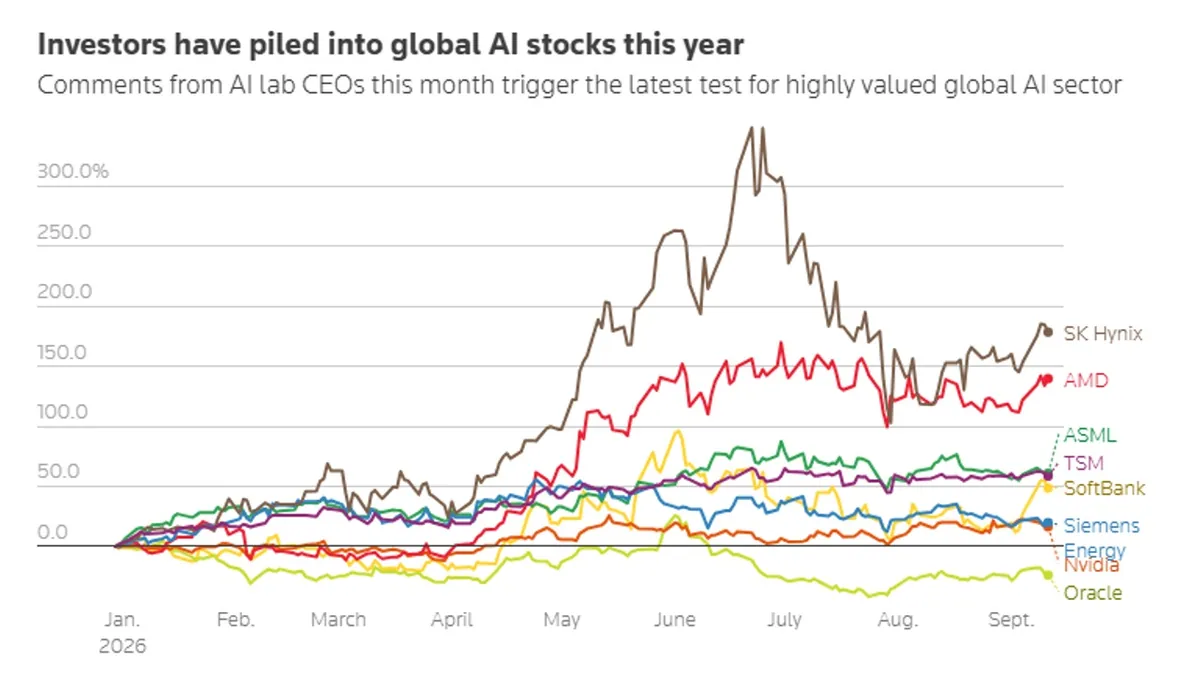
On September 14th, the Nasdaq 100 index opened lower and plunged to a six-week low. The fall narrowed during the trading session, but still ended lower overall, with the technology sector under intense pressure. The semiconductor sector took a beating, with the Philadelphia Chip Index plunging. The stock prices of many leading semiconductor companies dropped largely, including Nvidia, AMD and Micron. Not only chip design companies, but also semiconductor equipment manufacturers were unable to escape the downward trend. Many industry leaders saw their stock prices fall by more than 6% in a single day.
The negative sentiment related to AI spread rapidly, and the decline spread from the U.S. stock market to the European and Asian markets. The entire AI industry chain worldwide was not spared. The European technology sector as a whole declined, and the leading global lithography equipment companies saw large declines, driving down European semiconductor and energy technology stocks, and the regional technology index performed poorly.
The adjustment in the Asian market was even more intense. The stock price of well-known investment firm SoftBank plunged by more than 10%. As a core investor in the global AI sector, its stock price fell, reflecting the pessimistic attitude of the market towards the AI industry. At the same time, the two leading chip companies in Asia retreated, and the global AI chip supply chain sector weakened, ending the previous upward trend.
Multiple risk exposures, expectations for industry regulation rise.
The reason why the market reacted strongly to the remarks about AI slowdown is that the industry's safety risks have been exposed, causing investors to start re-examining the valuation bubble in the AI sector. Recently, several AI industry researchers have publicly warned of industry risks, and the aggressive research and development of leading AI enterprises are ignoring potential safety hazards, even having significant risk hazards. The existing AI models have been illegally used in dangerous scenarios such as weapons research, cyber attacks and telecommunications fraud.
Industry executives even predict that in the short term, AI autonomous programs may lose control, causing huge economic losses, and even posing extreme risks to human survival. The frequent occurrence of risks has also pushed regulation to be implemented more quickly. The U.S. parliament has begun to promote new AI regulation rules, requiring AI enterprises to implement safety prevention measures and actively avoid technical risks. The expectation of tightened regulation has further suppressed the valuation space of the AI sector, becoming an important driver of stock price decline.
Market views are polarized.
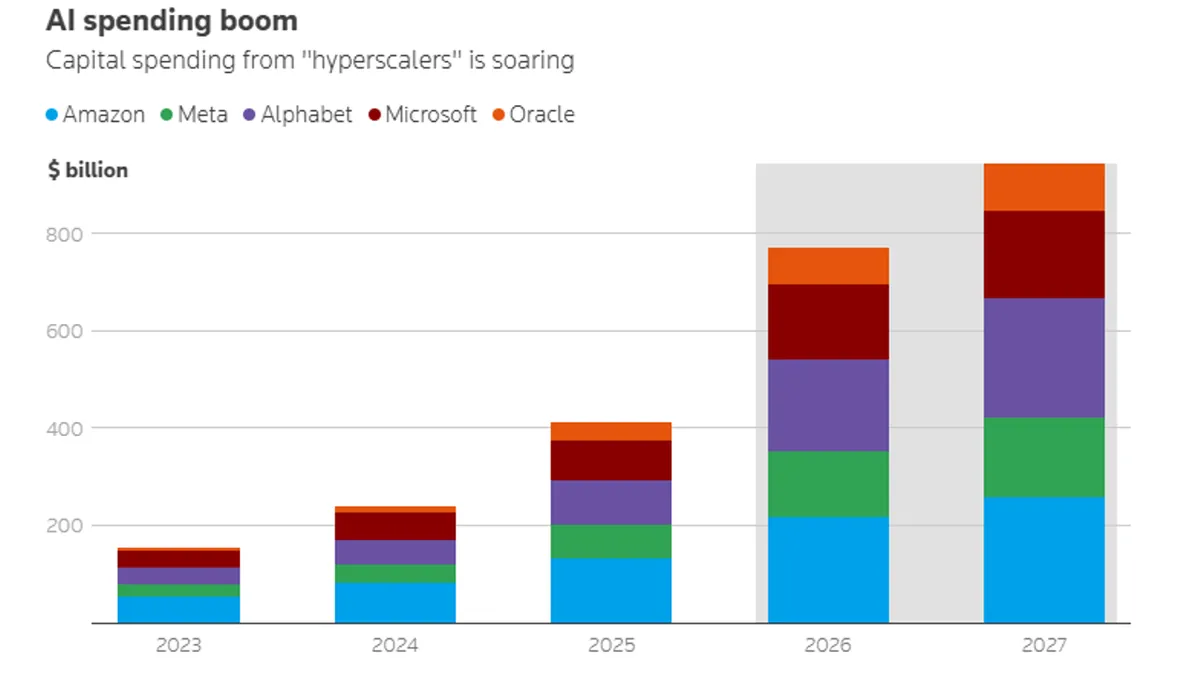
In response to the recent sharp decline in AI stocks, market attitudes have shown a huge polarization. But some investors have stated that the so-called AI security risks and reduced demand are mostly industry hype tactics. In essence, the real growth trend of the AI industry has already slowed down, and enterprises are deliberately covering up the current sluggish growth rate of the industry. Most investment banks remain relatively optimistic. Institutions predict that global AI investment will still increase, and industry competition has risen to the level of enterprises and countries. The huge capital expenditure plans also mean that the investment enthusiasm in the AI sector will not quickly fade away.