Hedge funds have poured in large amounts of capital into money market funds
World conflicts and worries about interest rates push investors to stay away from risks. A large amount of money is flowing into global money market funds.
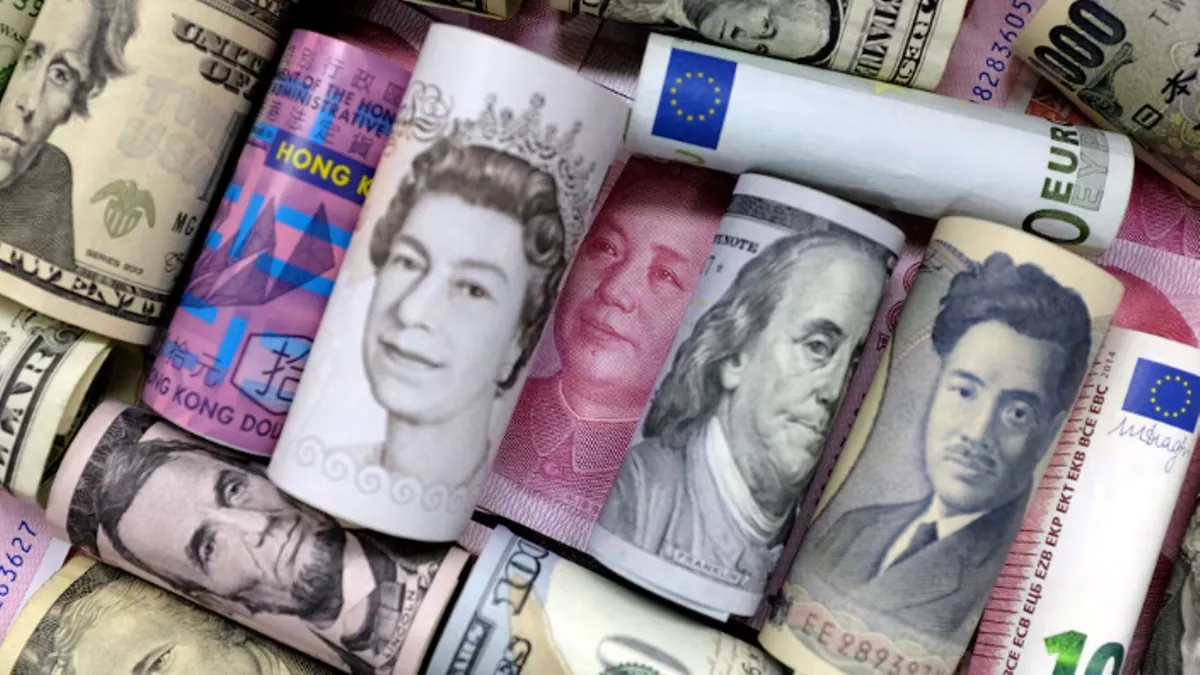
Money is flowing into money market funds.
As of September 2, global money market funds received a net inflow of $46.1 billion, marking the largest single-week capital inflow in the past month. The risk aversion of investors has increased. The shift of funds to safe assets was triggered by escalating tensions between the U.S. and Iran. The U.S. forces carried out attacks on Iranian military sites close to the Strait of Hormuz. Iran also responded with its own actions. The Strait of Hormuz is a key passage for global crude oil transportation, and with the intensifying geopolitical conflict, the market began to worry about the supply of crude oil.
Brent crude oil rose to $97.62 a barrel, a new five-week high. The rise in oil prices has added to fears over a rebound in inflation. News on interest rates has further unsettled market sentiment. Fed officials said if core inflation does not fall steadily toward the 2% target, the central bank still has a lot of policy work to do. Bond prices fell under pressure and the attractiveness of risky assets waned. Many funds chose to step out of the more volatile markets temporarily and into money market funds with good liquidity and low risk.
Equity funds have returned a profit overall but there is a regional split.
Stock-based funds as a whole recorded a net inflow of $6.65 billion, compared with a net outflow of $6.13 billion in the previous week, indicating a reversal in the capital situation. However, this does not mean that the global stock market has recovered. European stock funds received a net purchase of $13.09 billion, and Asian stock funds also attracted $4.22 billion of capital. In contrast, U.S. stock funds saw a net outflow of $11.12 billion during the week.
Within the U.S. stock fund segment, the technology sector continued its previous popularity, receiving capital additions for two consecutive weeks, with a single-week net inflow of $856 million. However, the financial and industrial sectors were sold off, recording $1.35 billion and $484 million of capital outflows respectively. Emerging market stock funds continued to attract capital purchases, with the capital inflow cycle extending to eight consecutive weeks, and a single-week net inflow of $1.99 billion.
The popularity of bond funds has cooled down, and short-term bonds have become the highlight.
Although global bond funds maintained net inflows, their scale dropped to $100.1 billion, the lowest level in five weeks. The attractiveness of the overall bond market has declined and the internal structure of funds has been adjusted. Short term bond funds have performed strongly against the trend, with a single week attracting $74.3 billion of funds, the largest single week inflow since July 8th. In an environment where interest rate expectations fluctuate, short duration bonds have smaller price fluctuations and investors are willing to increase allocation. Loan participation funds have also received favor from funds, with a single-week inflow of $1.08 billion.
Government bond funds had a net outflow of $3.34 billion, and corporate bond funds had a net outflow of $1.41 billion. The market is concerned that the duration of high interest rates will be longer, and the prices of long-duration bonds are under pressure. Investors have actively reduced such holdings. Money has moved from long-term bonds into short-term bonds, shortening the portfolio's duration and avoiding the risk of price declines from rising interest rates.
Energy funds suffer outflows, precious metals attract capital.
Within the commodity funds, gold and precious metal products remain strong, receiving capital inflows for the eighth consecutive week. The net inflow for the week was $2.85 billion. The intensification of geopolitical conflicts and the fluctuating inflation expectations will enhance the value of gold. Precious metals serve as a tool for hedging against geopolitical risks and currency fluctuations, and thus attract capital allocation. The trend of energy funds is opposite to that of precious metals. It has experienced capital outflows for the third consecutive week, with a net outflow of $232 million in a single week. Although geopolitical conflicts have pushed up oil prices, some investors believe that the short-term upward potential of oil prices is limited.
Global asset portfolios are undergoing a re-adjustment.
This round of changes in fund inflows is the result of the combined effect of multiple external factors. Geopolitical conflicts have brought risks of crude oil and inflation, and the hawkish stance of the Federal Reserve has raised expectations for interest rates. The combination of these two factors has led investors to adjust their asset portfolios. Funds have not withdrawn from risky assets, the technology sector still attracts investment. At the same time, a large amount of funds have entered money market funds. Risk appetite has declined, and a lot of funds have chosen to retain cash positions, waiting for the uncertainty to subside.