Mining stocks collectively plunged, pushing the Australian stock market to a two-month low
The Australian stock market experienced a large correction, hitting a new two-month low. Mining stocks suffered a heavy decline, while expectations of interest rate hikes rose. Only the banking sector managed to resist the decline and maintain its stability.

The market continued to weaken.
On September 11th, the overall sentiment of the Australian stock market was low. The benchmark S&P/ASX 200 Index closed down 0.9%, at 8,741.20 points, breaking the lowest closing record since July 2nd. The index fell by 2.1% in the entire week, which was the most severe weekly decline since mid-March this year. The NZ 50 Index also dropped by 1% on the same day, reaching a new low since the end of June. The entire Australian stock market was in a risk-averse situation.
This week, oil prices generally rose, even though they slightly declined on Friday. The full week ended up rising. High oil prices pushed up global inflation expectations. The market is worried that central banks of various countries will tighten monetary policies, suppressing the performance of the capital market. Institutional funds have a very clear attitude of hedging. The global bond market also saw a selling wave. The yields of Australian short-term and long-term government bonds exceeded 5% in total, reaching new highs since mid-2011. The sharp rise in bond yields compressed the valuation space of stocks.
The mining sector has suffered a complete collapse.
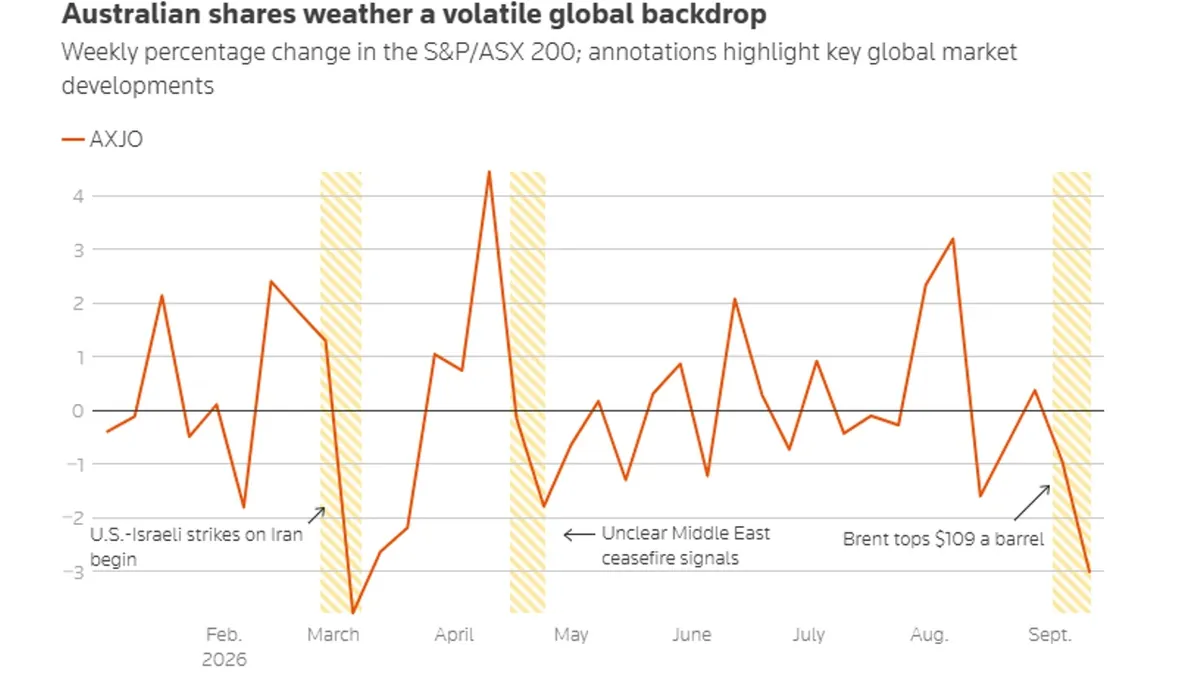
This week, the mining sector was the biggest drag on the Australian stock market. All the resource-weighted stocks took a serious beating. The Aussie mining sector index dropped 3.7% on the same day, the worst single day since June 19 and the weakest sector in the entire market. The international copper price dropped, and the market was concerned that the implementation of tariffs would disrupt metal pricing, increase manufacturing costs, and suppress industrial metal demand, triggering early selling of mining assets.
The global mining giant BHP Billiton suffered a 4.1% drop on the same day, and Rio Tinto also declined, with a 3.5% drop. The two major weight stocks fell largely, dragging down the index trend. The smaller lithium mining companies suffered even more severe declines, with fluctuations far exceeding those of traditional mining giants. Liontown plunged by 8.6% on the same day, and PLS Lithium declined by 7.4%. The lithium battery metal sector suffered a huge decline. The mining sector in the Australian stock market accounts for a high proportion. Price fluctuations of resource products and uncertainty of overseas policies will quickly be transmitted to the stock prices of individual companies.
The expectation of interest rate hikes has intensified, suppressing the valuations across the entire market.
Apart from the negative impact of commodities, the local monetary policy expectations in Australia are also exerting pressure on the stock market. This week, the Reserve Bank of Australia released a hawkish stance, coupled with the increase in energy prices, the inflation concerns in the market have risen, and the expectation of interest rate hikes has rapidly increased. Now, the interest rate hike expectation for November in Australia has reached 32 basis points, and the expectation for December has further risen to 39 basis points. Within a short period of time, the probability of interest rate hikes has increased.
The impact of a high-interest-rate environment on the stock market is very direct. On one hand, it will raise the financing costs for enterprises and compress their profit margins. On the other hand, it will cause the risk-free yield to rise, and funds will flow out of the stock market and turn to stable assets such as bonds and cash. The comprehensive breakthrough of government bond yields to 5% this time is an intuitive manifestation of the interest rate hike expectation.
The banking sector has emerged with an independent performance against the trend.
In the context of a widespread market decline and the collapse of resource stocks, the Australian financial sector has become the sole safe haven in the market. The financial sector rose by 1.1% in a single day, achieving its best single-day performance in nearly two weeks. The financial sector had closed lower for three consecutive rounds before. This round of rebound is a combination of oversold correction and positive fundamentals. The core positive factor for bank stocks comes from the escalating interest rate expectations. An upward interest rate can widen the net interest margin of banks and increase interest income.
The market is maintaining a wait-and-see attitude, with the focus on waiting for the upcoming release of the June quarter GDP data of New Zealand. The quality of economic data will directly affect regional monetary policy expectations, thereby determining the subsequent trend of the stock market. If the economic growth is weak, it will moderately alleviate the pressure on the central bank to raise interest rates, providing a breathing space for the stock market. Conversely, it will further strengthen the tightening expectations and exacerbate the adjustment trend.