TTF natural gas futures reflect concerns over winter energy supply in Europe
The Middle East conflict has also taken a large amount of LNG supplies offline and European gas storage progress is at a 15-year low compared to the same time last year. This has led to a sharp rise in TTF natural gas futures.
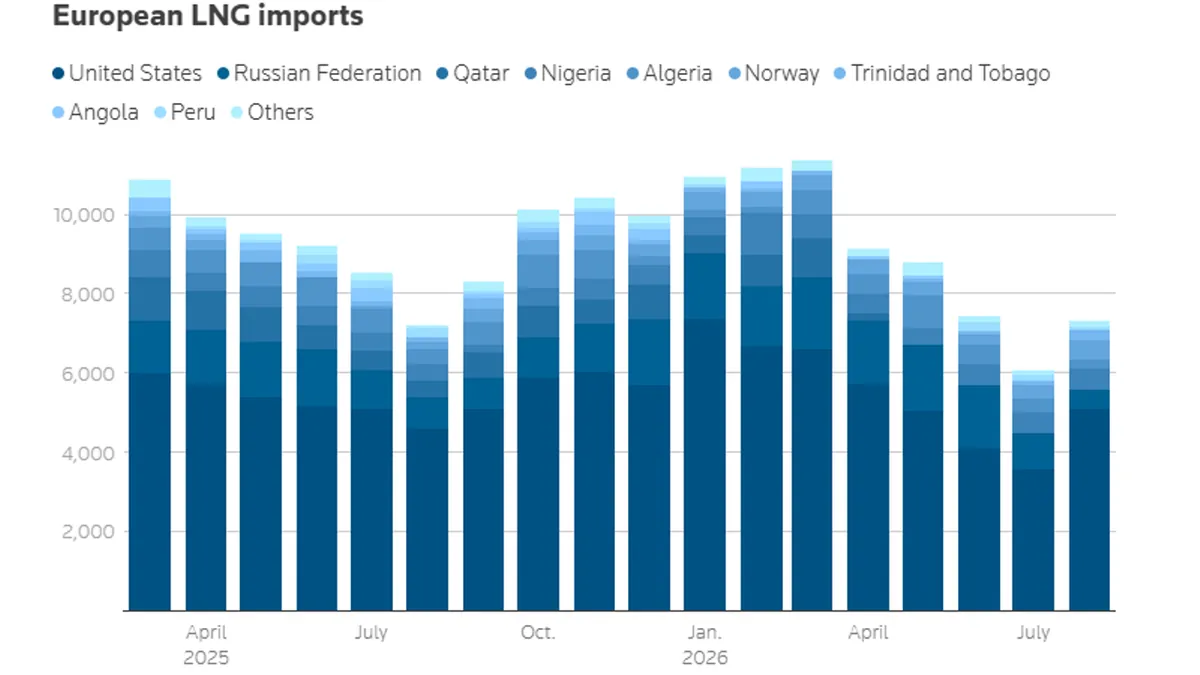
The disruption of LNG exports from the Middle East has triggered a rapid tally of the supply shortfall in TTF futures.
The European benchmark TTF natural gas futures price has skyrocketed, with the latest quote at 75 euros per megawatt-hour. This is the highest level since the energy crisis at the end of 2022 and the price has doubled compared to a year ago. The catalyst of this round of the market is the disruption of shipping in the Strait of Hormuz, which accounts for one-fifth of global LNG transportation. After the strait's navigation was restricted, LNG exports from the Gulf region contracted, and the global natural gas spot market immediately tightened.
Data shows that from March to August this year, LNG exports from the Gulf region declined by more than 85% year-on-year. The export volumes of Qatar and the UAE largely contracted. The QatarEnergy has informed its customers that the state of the force majeure supply suspension will continue until early November. This supply shock is not a short-term event and will last at least until the end of the year.
There is a scramble for supply in the global market. The Asian region experienced high temperatures this summer, with the demand for air conditioning cooling electricity surging. A large number of LNG cargo ships originally planned to transport to Europe changed their route and headed to Asia instead. Europe missed the window for replenishing stocks during the summer and the progress of filling the gas storage facilities was lagging. The TTF contract price, in addition to the current spot price, places more emphasis on the safety margin of inventory during the winter heating season. The low inventory environment will push up the risk premium of the futures.
The progress of gas storage in Europe has lagged largely, and the inventory disparities among different countries have intensified.
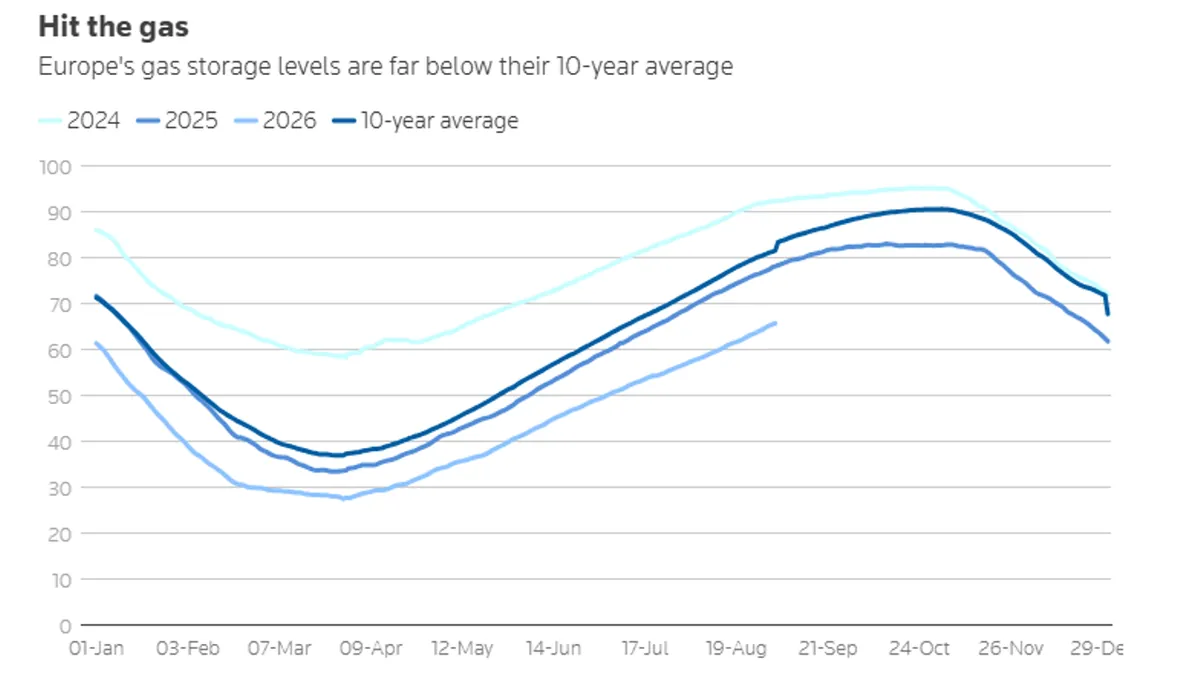
Data shows that the current overall gas storage filling rate in Europe is about 66%, marking the lowest record in the past 15 years and 12% lower than that of the same period last year. The gas storage facilities in Europe usually complete the gas injection in early November, and the ROI institution estimates that the final gas storage level this year can only reach 70% to 75%. The storage level in the same period in 2025 reached 83%. If the winter temperature is mild, a gas storage level of around 70% can basically ensure a smooth passage through the heating season. In the event of a prolonged cold wave, the demand for gas will jump, and there will be a shortage in the spot market. The near-month contract of TTF is likely to experience a pulse-like sharp increase.
Looking at the situation by country, the situation is even more severe. Germany has the largest gas storage network in Europe, but its current filling rate is only 54%. The Netherlands, as the core gas hub in Europe, has a gas storage facility filling rate of only 48%. When winter arrives, the inventories of Germany and the Netherlands will be at a low level, and they can only purchase LNG ships or rely on pipeline imports from neighboring countries in the spot market. This passive purchasing behavior will further push up the TTF natural gas futures price.
The increase in LNG production in North America partially fills the gap.
The export of LNG from the Gulf region has largely declined, but there is still some new supply in the global market. According to the IEA data, by the end of June, the LNG production in regions other than the Middle East had increased by 18% year-on-year, with an additional supply of about 27 billion cubic meters, compensating for about 75% of the loss in the Middle East. The increase mainly came from the new LNG export projects in the U.S. and Canada. This is the core reason why the TTF futures did not repeat the extreme skyrocketing trend in 2022.
The continuous release of new LNG capacity in North America continues to provide a buffer for the global market. However, the new capacity also has bottlenecks. The LNG shipping capacity is limited, and there is an upper limit to the loading and unloading capacity at the terminals, which can not supply goods to Europe infinitely and rapidly. The market has formed a new game logic. North American LNG can alleviate the gap, but it can not completely offset the impact of the blockade of the Strait of Hormuz. The futures bulls focus on the supply disruption in the Middle East and the low inventories in Europe. The bears bet on the shipment of U.S. LNG, suppressing the price surge.
High-priced natural gas raises the production costs of European industries.
The increase in natural gas prices is not only a rise in short-term heating bills, but also impacts European manufacturing and other industries. The European electricity market adopts a marginal pricing mechanism, and the price of natural gas power generation basically determines the wholesale price. The increase in natural gas prices leads to an increase in electricity prices. Europe is building a large number of high-energy-consuming data centers. The rise in energy costs will directly increase the investment cost of the AI industry. The European automotive manufacturing industry is already facing huge competitive pressure, and the further increase in energy costs will compress the profit margins of the manufacturing industry.
The total bill for natural gas in Europe will reach 117 billion euros in 2025, even if natural gas consumption drops by 17% compared to before the crisis. This year, the gas price has risen again, and the overall import expenditure in Europe will continue to rise. During the crisis in 2022, European countries launched large-scale fiscal subsidies to share energy costs with residents and enterprises. Now, with greater fiscal pressure in various countries, it is difficult to replicate the large-scale subsidy schemes again. Enterprises and residents can only bear the high-priced energy directly.