Waymo intensifies lobbying efforts and engages in a fierce policy battle with Uber over the robotaxi regulations
Waymo increases lobbying budget in the United States to promote regulations for full autonomous driving, as it is engaged in a fierce policy confrontation with Uber's phased mixed operation approach.
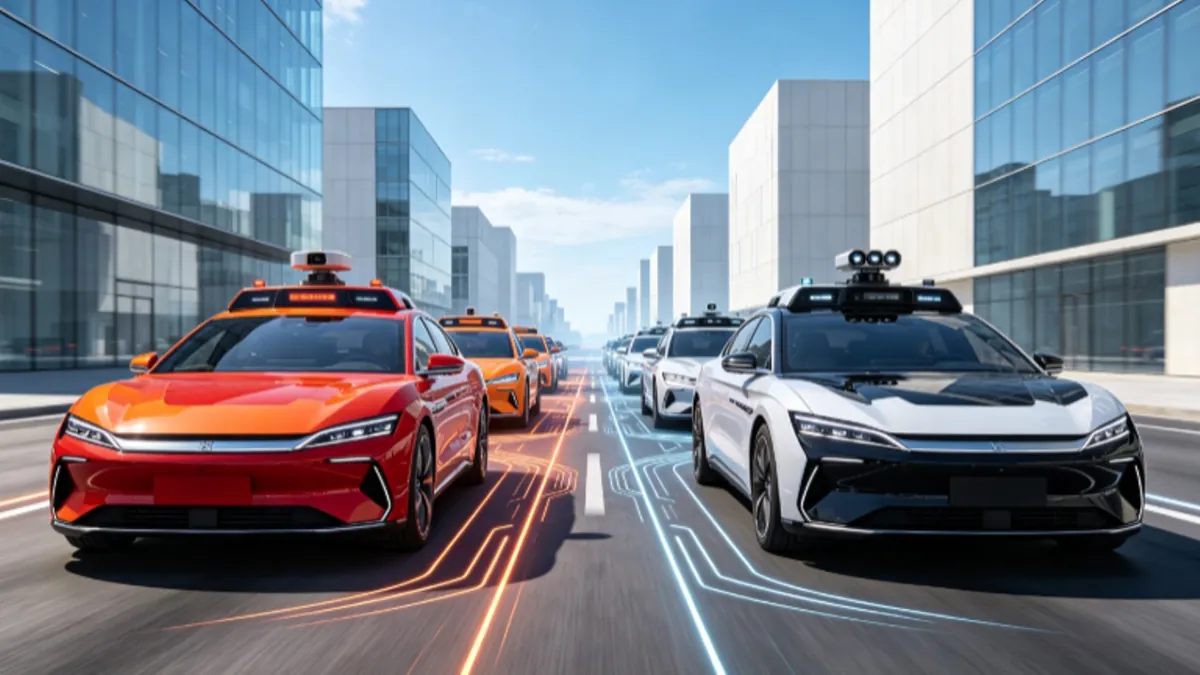
Waymo increases lobbying budget amid fierce policy competition.
Waymo, Google's autonomous-driving unit, is stepping up its policy lobbying across a number of US states. Waymo's lobbying expenses at the federal level exceeded $1 million in the quarter from April to June, twice the amount spent during the same period last year. In the first half of 2026, its total lobbying investment exceeded $2 million, up 93% year-on-year. This investment scale is already close to that of Uber, far surpassing those of Zoox, Tesla and other robotaxi players.
Robotaxi is not just a technological competition, local regulations directly determine whether it can be on the road and to what extent it can be made available. No matter how advanced the technology is, if the regulations are not relaxed, the commercialization process will be blocked. Waymo and Uber originally had a cooperation project in Austin and Atlanta, but the policy routes of the two companies have become increasingly conflicting. There are reports saying that Waymo is evaluating withdrawing from these two cities' cooperation. Industry analysts believe that the two companies' mutual lobbying competition has accelerated the breakdown of their partnership.
Two completely opposite landing routes for robotaxis.
The core disagreement between the two companies lies in how robotaxis should be launched onto the market. Waymo advocates for a fully autonomous driving solution and hopes that the United States will establish a unified federal regulatory framework to allow fully unmanned Robotaxis to operate on a large scale without safety personnel. It wants to achieve this in one step and directly put unmanned vehicles on the market as an independent transportation capacity.
Uber's approach is completely different. As early as 2020, Uber shut down its self-developed autonomous driving team and instead focused on unmanned vehicle business through investment and partnership fleets. In the past year, Uber has invested and collaborated on related projects with over $10 billion. Uber advocates a hybrid network model. On the platform, both human drivers and robotaxis receive orders at the same time, gradually increasing the proportion of unmanned vehicles.
On the outside, Uber says it is not against self-driving and does not want to slow the technology's deployment. The hybrid model allows new technologies to reach ordinary users earlier and facilitates the smooth transition period management by regulatory agencies. Critics, however, do not see it this way. They believe that Uber's solution is basically to use regulations to protect its current ride-hailing business, raise the barriers to entry for companies that are purely driverless and limit how fast competitors like Waymo can grow.
The issue of driver employment has always been a non-negotiable topic.
Waymo has spent a lot of money trying to win over state lawmakers. Rules are very different in each US state. To run its business well, Waymo needs to convince local lawmakers one state at a time. New York is a key market for Waymo. So far this year, Waymo has spent over $500,000 on lobbying in New York. That is more than twice what Uber spent there. To secure the support of lawmakers and the public, Waymo proposed setting up a $20 million special fund to help ride-hailing drivers who have been impacted by autonomous vehicles, alleviating the employment-related opposition.
Both Waymo and Uber face resistance from the political sphere and labor groups during the promotion of robotaxis. The biggest controversy is driver employment. The traditional ride-hailing driver group is worried that once large-scale deployment of autonomous taxis is implemented, a large number of jobs will disappear. This is also the reason why the Uber hybrid model is more likely to gain the approval of some politicians.
There is a very realistic situation in the autonomous driving industry: the gap in technical capabilities sometimes has a greater impact than the gap in regulatory policies. Many companies' autonomous vehicles can already operate stably in limited areas, but regulations do not allow it, and thus the operation scope cannot be expanded. Waymo's technical approach is to directly implement fully autonomous vehicles, and the corresponding regulatory demands are more radical. It needs legal recognition that vehicles without human safety officers can operate independently and undertake passenger transportation services. Once these rules are implemented, Waymo can quickly replicate and expand.
Uber itself does not produce autonomous driving hardware, its core asset is the ride-hailing platform. The hybrid model can embed autonomous vehicles into the existing platform system without a one-time disruption of the existing ride-hailing business. Uber's policy propositions are more in line with its own platform business model.